+91 83682 47758
info@medivisorhealth.com
Medivisor India Treatment Logo
  • Home
    • About Us
    • Our Services
    • Our Team
    • Our Safety Measures
    • Loading treatments...
    • Loading hospitals...
    • Loading doctors...
    • Loading tests & diagnoses...
    • Treatment Cost
    • Treatment Process
    • Visa Process
    • Travel Guide
    • FAQs
    • Why Medivisor
    • Success Stories
    • Patient Activities
    • Social Activities
    • News Coverage
    • Blog
  • Become a Partner

Medivisor India Treatment is a trusted New Delhi-based medical travel company assisting international patients with advanced, affordable, and seamless treatment in India.

  • Medivisor House 359, Sector 1, Vaishali, Ghaziabad, (Delhi/NCR) India
  • +91 8368 247 758
  • info@medivisorhealth.com

About Us

  • About Us
  • Our Services
  • Our Team
  • Our Safety Measures
  • Join Our Network
  • Contact Us

India Treatment

  • Hospitals
  • Treatments
  • Treatment Cost
  • Treatment Process
  • Visa Process
  • Travel Guide
  • FAQs
  • Why Medivisor

Gallery

  • Patient Testimonials
  • Patient Activities
  • News Coverage
  • Blog

Get in Touch

© 2026 Medivisor India Treatment. All rights reserved.

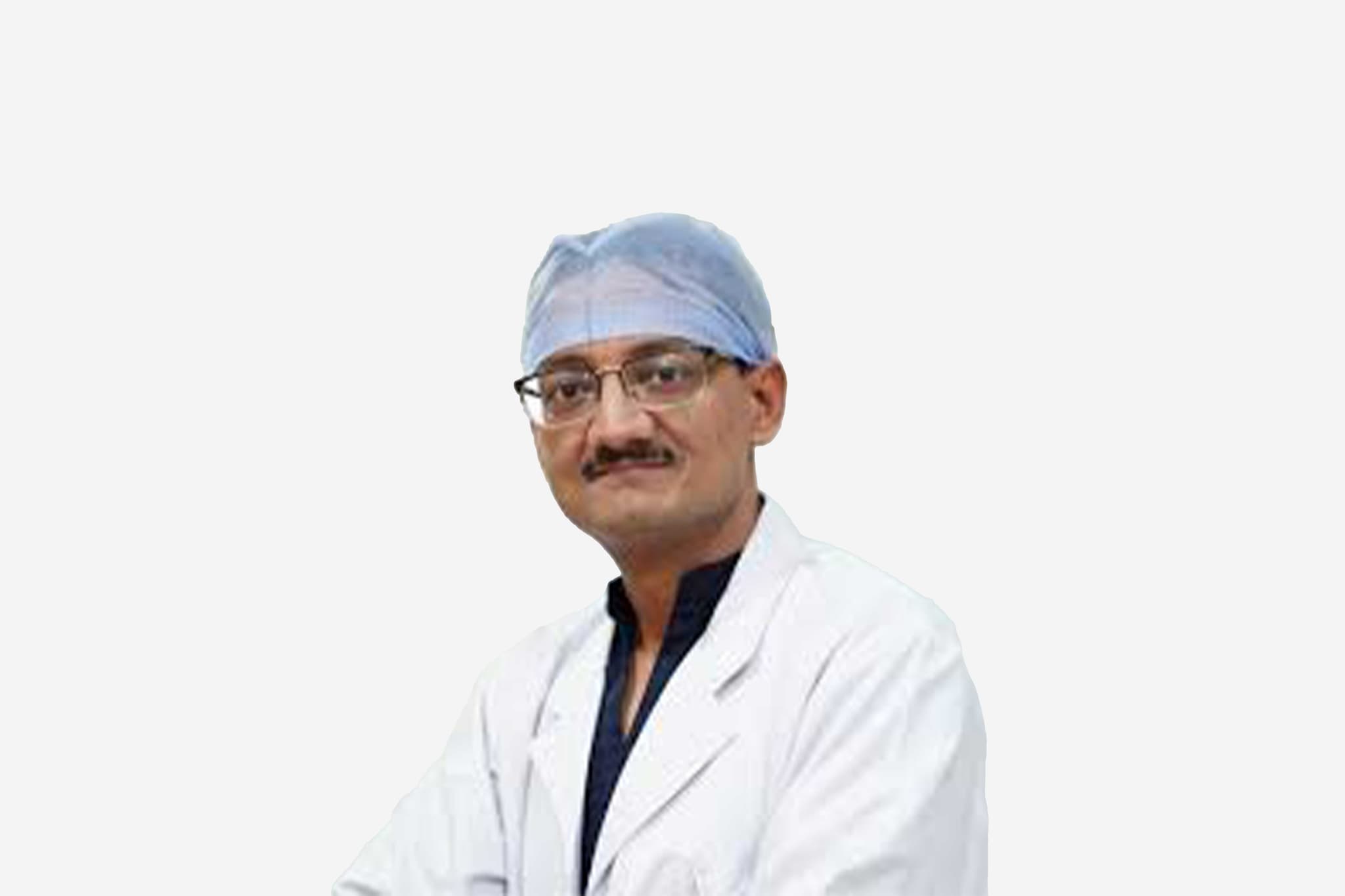
Dr Pradeep Kumar Jain

Chairman – GI, GI Oncology, Minimal Access & Bariatric Surgery

Fortis Hospital, Shalimar Bagh, New Delhi

35+ years experience

Dr Pradeep Kumar Jain, Chairman – GI, GI Oncology, Minimal Access & Bariatric Surgery at Fortis Hospital, Shalimar Bagh, New Delhi - Fortis Healthcare
  1. Home
  2. Doctors
  3. Dr Pradeep Kumar Jain

About Dr Pradeep Kumar Jain

Dr. Pradeep Jain is an internationally acclaimed surgical gastroenterologist with over 28 years of profound clinical experience. Currently serving as the Principal Director and Head of the Department of Laparoscopic & Robotic GI, GI Onco, HPB & Minimal Access Surgery at Fortis Hospital, Shalimar Bagh, he is a central figure in India’s surgical landscape. With a career defined by a portfolio of over 30,000 successful surgeries, he combines extensive training from India's premier institutes with advanced international fellowships to deliver world-class surgical outcomes.

Pioneering Breakthroughs in Robotic GI Oncology and HPB Surgery

Dr. Jain is a pioneer in the integration of robotic-assisted technology for complex gastrointestinal malignancies. As a certified robotic surgeon by Intuitive Surgical, he specializes in high-precision procedures for GI Oncology and Hepatobiliary-Pancreatic (HPB) conditions. His expertise in liver and pancreas surgery, alongside his proficiency in managing complex cancers of the digestive tract, ensures that patients benefit from sub-millimeter accuracy, reduced blood loss, and significantly faster recovery times compared to traditional open surgery.

National Leadership and Academic Excellence

An alumnus of the prestigious Maulana Azad Medical College (MAMC), Dr. Jain completed his M.Ch in Gastrointestinal and Hepatobiliary Surgery from G.B. Pant Hospital, one of India’s most elite training grounds for surgical gastroenterology. His leadership is recognized across the medical community, currently serving as the Chairman of the GI Council for Pan Fortis. His academic rigors and surgical skills are further bolstered by advanced training in Laparoscopic Colorectal surgery from world-class centers in South Korea, Japan, and the United States.

Advancing the Future of Bariatric and Minimal Access Surgery

Beyond oncology, Dr. Jain is a leading authority in Bariatric Surgery (Weight Loss Surgery) and advanced minimal access techniques. He has been trained at the Asian Institute of TeleSurgery (AITS) in Taiwan, a global hub for surgical innovation. By implementing "Fast-Track" protocols in bariatric and laparoscopic colorectal procedures, he has set new benchmarks for patient safety and functional restoration. His mastery of "Key-Hole" surgery allows for the management of complex hernias and metabolic disorders with minimal surgical trauma.

Innovation and Clinical Expertise

Dr. Jain’s surgical repertoire is exceptionally diverse, encompassing Open, Laparoscopic, and Robotic techniques. His particular areas of focus include Esophageal, Gastric, and Colorectal cancers, as well as complex benign conditions of the gallbladder and bile ducts. By bridging the gap between clinical research and operative excellence, he ensures that the latest global advancements are accessible to his patients, solidifying his reputation as a trusted name in advanced surgical gastroenterology.

Dr. Pradeep Jain at a Glance

  • Principal Director & Head of GI, Robotic, and Minimal Access Surgery at Fortis, Shalimar Bagh.

  • Performed over 30,000 successful GI surgeries using Open, Laparoscopic, and Robotic methods.

  • Alumnus of MAMC and G.B. Pant Hospital (M.Ch – GI Surgery).

  • Certified Robotic Surgeon with advanced training from South Korea, Japan, Taiwan, and the USA.

  • Chairman of the GI Council for the entire Fortis Healthcare network.

  • Specialist in GI Oncology, Bariatric Surgery, and Hepatobiliary (Liver/Pancreas) Surgery.

M.S
M.Ch - Gastroenterology Surgery

No awards & achievements available

May we help you?

Enter digits only (6-15 digits). We'll add your country code.

Related Treatments

Revisional Bariatric Surgery

Revisional bariatric surgery is a specialized procedure performed on patients who have already undergone a primary weight-loss surgery but require a second operation. This may be due to medical complications, insufficient weight loss, or significant weight regain. Because of existing scar tissue and altered anatomy, these procedures are more complex and carry higher risks than initial weight-loss surgeries.

When You Should Consider Revisional Surgery

  • Inadequate Weight Loss or Regain: If the initial stomach pouch has stretched over time or the body has adapted to the metabolic changes of the first surgery.

  • Severe Acid Reflux (GERD): Persistent or worsening reflux that does not respond to medication, frequently occurring after a gastric sleeve procedure.

  • Mechanical Complications: Issues such as a "slipped" gastric band, a staple line leak, or a narrowing (stricture) of a previous surgical connection.

  • Chronic Ulcers or "Dumping Syndrome": Persistent digestive issues following a bypass that cannot be managed through dietary changes alone.

  • Nutritional Malabsorption: Severe deficiencies in vitamins or protein that remain uncontrolled despite high-dose supplementation.

Common Revisional Procedures

  • Sleeve to Bypass Conversion: Converting a gastric sleeve into a Roux-en-Y gastric bypass. This is highly effective for treating severe reflux and triggering further weight loss.

  • Gastric Band Conversion: Removing a "Lap-Band" and converting the anatomy into either a sleeve or a bypass, often performed in a single or two-stage process.

  • Bypass Revision (Stoma Tightening): For a stretched gastric bypass, a surgeon may "re-tighten" the connection (stoma) to restore the feeling of fullness.

  • Intestinal Lengthening: Adjusting the "Roux" limb to increase the bypassed section of the intestine, thereby increasing calorie malabsorption.

  • Sleeve Re-Sleeving: Trimming a previously stretched gastric sleeve to restore its original narrow, restrictive shape.

How Is Performed

  • Anesthesia: The surgery is performed under general anesthesia and typically takes between 2 to 4 hours due to the precision required.

  • Surgical Approach: Almost always performed laparoscopically or robotically to navigate through previous scar tissue with high-definition visualization and accuracy.

  • Managing Adhesions: The surgeon must carefully separate internal scarring (adhesions) from previous operations before the new revision can begin.

  • Stapling and Joins: New surgical joins are created using specialized stapling instruments designed for thicker or scarred tissue.

  • Leak Testing: Extensive intra-operative testing is performed to ensure all new connections are watertight and airtight before finishing.

Pre-Procedure Preparation

  • Anatomy Mapping: Extensive imaging is required to visualize the current state of the stomach and intestines before entering the operating room.

  • Nutritional Optimization: Correcting any existing vitamin deficiencies through intensive supplementation prior to surgery.

  • Psychological Assessment: A thorough review to ensure the patient is prepared for the "reset" in dietary habits and lifestyle expectations.

  • Smoking Cessation: Patients must stop smoking at least 6 to 8 weeks before surgery, as nicotine significantly increases the risk of staple line leaks in scarred tissue.

  • Weight Management: Following a specific pre-operative diet to reduce liver size and improve surgical access.

Tests Before Revisional Surgery

  • Upper Endoscopy (EGD): Inserting a camera into the stomach to inspect the pouch and check for ulcers, inflammation, or stretching.

  • Barium Swallow (UGI Series): A specialized X-ray where the patient swallows contrast liquid to show the exact size and flow of the current anatomy.

  • Abdominal CT Scan: To provide a 3D view of the internal organs and identify any hidden hernias or mechanical issues.

  • Comprehensive Blood Panels: Detailed analysis of iron, B12, Vitamin D, and protein levels to establish a baseline.

Life After Revisional Surgery

  • Hospital Stay: Usually involves 2 to 3 nights of close monitoring to ensure the new surgical joins are healing correctly.

  • Dietary Reset: Patients must return to a "Phase 1" clear liquid diet and progress slowly through pureed and soft foods over a 4–6 week period.

  • Slower Weight Loss: It is important to note that weight loss after a revision is typically slower and less dramatic than after the first surgery.

  • Lifelong Monitoring: Regular follow-up appointments and blood tests are essential to monitor for malabsorption and nutritional health.

  • Activity Restrictions: Light walking is encouraged immediately, but heavy lifting and core-straining exercises are restricted for 6 weeks.

Why Specialized Treatment Is Highly Effective

  • Resolves Chronic Pain and Reflux: Provides immediate relief for patients suffering from the mechanical failures or side effects of a primary surgery.

  • Second Chance for Health: Allows patients who did not reach their goals to restart their weight-loss journey with a more powerful metabolic tool.

  • Precision Technology: The use of robotic platforms allows surgeons to operate safely in "hostile" abdomens filled with previous scar tissue.

  • Customized Anatomy: Every revision is tailored specifically to the patient’s existing anatomy, ensuring the most effective solution for their unique situation.

  • Prevents Long-Term Damage: Addressing issues like chronic ulcers or severe reflux prevents permanent damage to the esophagus and digestive tract.

Starting Cost: $ 2000

Related Specialists

Dr Amite Pankaj Aggarwal
Principal Director & HOD - Orthopedics
Fortis Hospital, Shalimar Bagh, New Delhi
27+years experience
View Profile
Dr Anup Sabherwal
Dr Anup Sabherwal
Senior Consultant - ENT
Fortis Hospital, Shalimar Bagh, New Delhi
24+years experience
View Profile
Dr Rajinder Yadav
Dr Rajinder Yadav
Principal Director - Urology
Fortis Hospital, Shalimar Bagh, New Delhi
42+years experience
View Profile
Dr Jaideep Bansal
Dr Jaideep Bansal
Principal Director & HOD - Neurology
Fortis Hospital, Shalimar Bagh, New Delhi
30+years experience
View Profile

May we help you?

Enter digits only (6-15 digits). We'll add your country code.