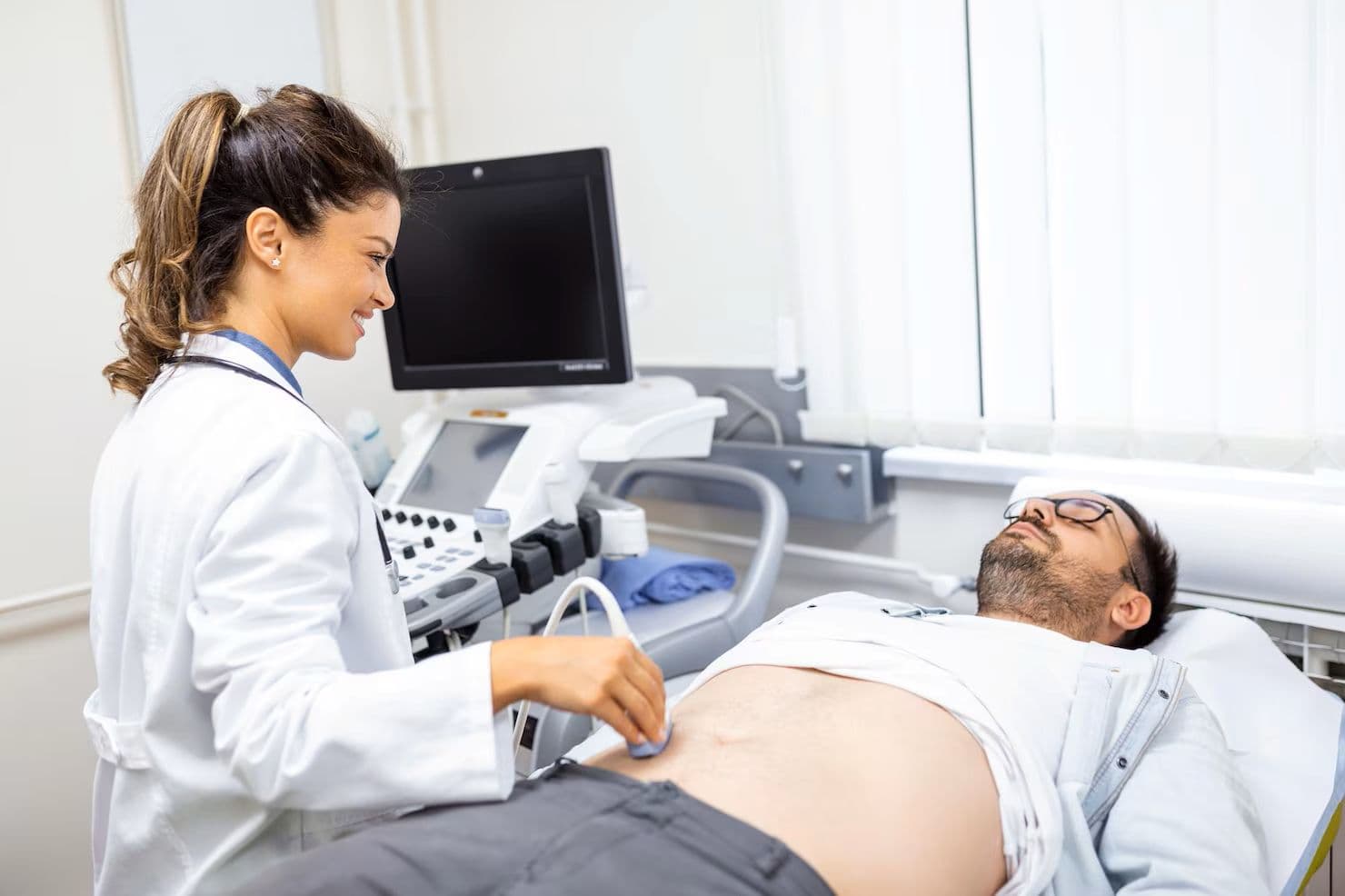
Endoscopic Ultrasound (EUS)
Endoscopic Ultrasound (EUS)
Endoscopic Ultrasound (EUS) is a sophisticated minimally invasive procedure that combines high-definition endoscopy with medical ultrasound. By attaching an ultrasound transducer to the tip of an endoscope, physicians can capture detailed images of the digestive tract wall and the surrounding internal organs, such as the pancreas, liver, and gallbladder. In 2026, EUS is the clinical benchmark for "seeing through" the intestinal walls, providing a level of detail for staging cancers and evaluating deep-seated lesions that often surpasses traditional CT or MRI scans.
Core Purpose of EUS
Precision Cancer Staging: Determining exactly how deep a tumor has penetrated the intestinal wall and whether it has reached nearby lymph nodes.
Pancreatic Diagnosis: Identifying small pancreatic masses, cysts, or early signs of chronic pancreatitis that are difficult to visualize with external imaging.
Subepithelial Lesion Evaluation: Assessing "bumps" found during a standard endoscopy to see which layer of the wall they originate from.
Biliary Stone Detection: Finding tiny stones in the bile duct (microlithiasis) that may be the hidden cause of unexplained abdominal pain.
Guided Biopsy: Performing real-time, needle-based sampling of masses located behind the stomach or intestinal lining.
Lymph Node Mapping: Evaluating enlarged lymph nodes in the chest or abdomen to check for signs of infection, sarcoidosis, or malignancy.
Conditions That Require Specialized Care
Pancreatic Cystic Neoplasms: Requiring detailed fluid analysis and "mural nodule" checks to determine the risk of future malignancy.
Autoimmune Pancreatitis: Using EUS to differentiate this treatable condition from pancreatic cancer, potentially avoiding unnecessary surgery.
Celiac Plexus Block: Patients with severe abdominal pain from pancreatic cancer who require EUS-guided nerve injections for pain relief.
Complex Biliary Obstruction: When standard ERCP fails, EUS can be used to create an internal "bypass" (EUS-guided biliary drainage).
Gastric Varices: Using EUS to precisely inject glue or coils into enlarged veins in the stomach to prevent life-threatening bleeding.
Note: The proximity of the ultrasound probe to the internal organs allows for high-frequency imaging, which provides much higher resolution than a standard ultrasound performed through the skin.
How an EUS Is Performed
Sedation: The procedure is performed under deep sedation or monitored anesthesia to ensure the patient is completely comfortable and still.
Echoendoscope Insertion: A specialized, flexible tube with an ultrasound tip is passed through the mouth (Upper EUS) or rectum (Lower EUS).
Internal Imaging: The doctor places the ultrasound tip directly against the area of interest, using water or a small balloon to create a clear "acoustic window."
Fine-Needle Biopsy (FNB): If a mass is found, a thin needle is passed through the scope and through the intestinal wall to collect a high-quality tissue core.
Real-Time Guidance: The entire sampling process is viewed on an ultrasound monitor, allowing for sub-millimeter precision in needle placement.
Therapeutic Action: In the same session, doctors can drain fluid collections or place internal stents to bypass blockages.
Innovations in Endosonography
EUS-Guided Tissue Acquisition (FNB)The shift toward "core" needles that provide intact tissue architecture, allowing pathologists to perform complex genetic testing for personalized cancer care.
Contrast-Enhanced EUSUsing micro-bubble injections to highlight the blood flow within a tumor, making it easier to distinguish between benign and malignant masses.
EUS-ElastographyA technology that measures the "stiffness" of a tumor in real-time; harder tissues are more likely to be cancerous, providing instant diagnostic clues.
Artificial Intelligence (CADx)AI software that assists the physician by identifying "areas of concern" on the ultrasound feed and suggesting the best sites for biopsy.
EUS-Guided Radiofrequency Ablation (RFA)Using a specialized needle to deliver heat directly into a pancreatic tumor or cyst to destroy it without an external incision.
Lumen-Apposing Metal Stents (LAMS)Specialized "dumbbell" shaped stents that allow doctors to create a permanent bridge between the stomach and a cyst for easy drainage.
Pre-Procedure Preparation
Fasting (NPO): To ensure a clear view of the surrounding organs, the stomach must be completely empty (usually 6–12 hours of fasting).
Medication Review: Coordination regarding blood thinners, as these must be paused if a needle biopsy is planned.
Diagnostic Coordination: Reviewing previous CT or MRI scans so the physician can focus the ultrasound on the specific area of concern.
Transportation: Because of the deep sedation used, patients must have a responsible adult to drive them home and monitor them.
Antibiotic Prophylaxis: A dose of antibiotics may be given if a cyst is being sampled or drained to prevent infection.
Diagnostic and Safety Monitoring
Real-Time Doppler Imaging: Using the ultrasound to identify major blood vessels before a needle is inserted, virtually eliminating the risk of internal bleeding.
On-Site Pathology (ROSE): In many centers, a pathologist checks the needle samples immediately to ensure they are sufficient for a full diagnosis.
Post-Biopsy Surveillance: Monitoring for signs of abdominal pain or fever, particularly if the pancreas was sampled, to catch any early signs of irritation.
Vital Sign Integration: Continuous tracking of heart rate and blood oxygen levels by an anesthesiology professional throughout the procedure.
Why This Treatment Is Highly Effective
Superior Resolution: Because the ultrasound probe is inside the body, it provides much higher resolution than an ultrasound done through the skin.
Avoids "Blind" Biopsies: Allows for the sampling of small lesions that would be too dangerous or difficult to reach via the skin.
Comprehensive Staging: It is the single most accurate tool for determining if a gastrointestinal cancer is localized or has spread to nearby nodes.
Immediate Therapy: Often, a diagnosis can be made and a therapeutic intervention (like draining a cyst) can be performed in the same visit.
Safety Profile: While more complex than a standard endoscopy, diagnostic EUS remains extremely safe with a very low complication rate.
Recovery and Aftercare
Immediate Post-Op: Patients stay in recovery for 1 to 2 hours until they are fully awake and alert.
Sore Throat and Bloating: These are common, temporary sensations that usually resolve within 24 hours.
Dietary Transition: Most patients can resume a light, normal diet as soon as they get home.
Activity: No driving or operating machinery for 24 hours. Most individuals return to work and full activity the next day.
Results Timeline: Preliminary visual results are shared immediately; final biopsy results including molecular markers take 5–7 business days.
Life After EUS
Clearer diagnostic answers for complex abdominal symptoms that previous scans couldn't explain.
Highly accurate cancer staging, ensuring that the patient receives the most appropriate treatment plan from the start.
Successful management of pancreatic and biliary issues through minimally invasive drainage rather than major surgery.
Peace of mind knowing that a suspicious mass has been thoroughly evaluated and sampled with high precision.
A return to health with minimal interruption to daily life and professional activities.