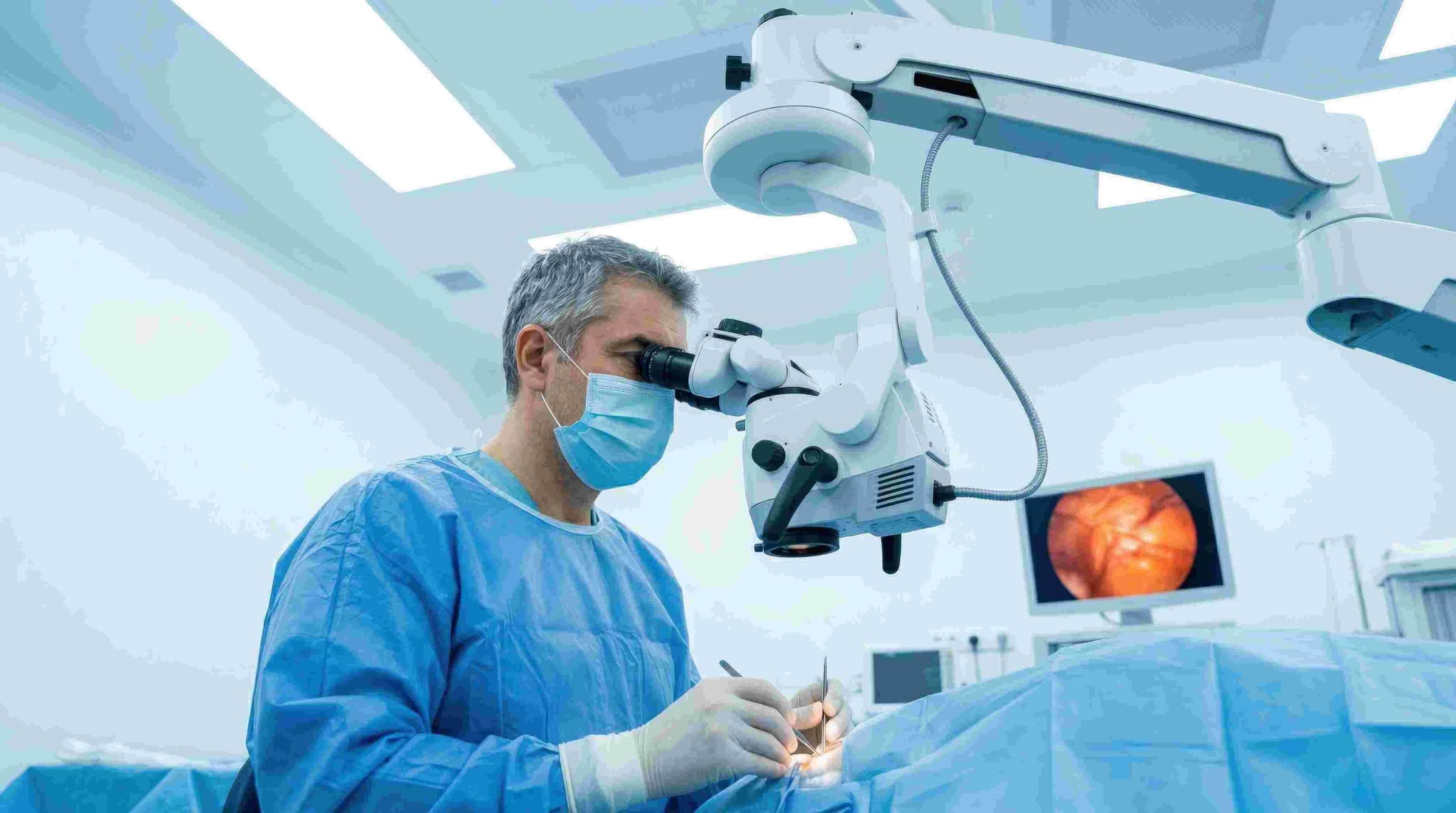
Laser Prostate Surgery (HoLEP / ThuLEP)
Laser Prostate Surgery (HoLEP & ThuLEP)
Laser prostate surgery, specifically HoLEP (Holmium Laser Enucleation of the Prostate) and ThuLEP (Thulium Laser Enucleation of the Prostate), is a modern, bloodless alternative to traditional TURP. Instead of shaving the prostate in small pieces, the laser "peels" the obstructing tissue away as a whole, making it highly effective for even the largest prostate glands.
When You Should Consider Laser Prostate Surgery
Very Large Prostate: Especially effective for prostates over 80–100 grams that are too large for standard TURP.
High Risk of Bleeding: Ideal for patients who cannot safely stop blood thinners, due to the laser's superior vessel-sealing properties.
Severe Urinary Retention: When a patient is completely unable to pass urine and requires a catheter.
Recurrent Prostate Issues: For those who have had previous prostate surgery and are experiencing regrowth of obstructing tissue.
Desire for Fast Recovery: For patients who want a shorter hospital stay and quicker removal of the urinary catheter.
Methods of Laser Prostate Surgery
HoLEP (Holmium Laser): Uses a "pulsed" laser beam, which is excellent for "blunt dissection" (peeling) the prostate lobes away from the capsule.
ThuLEP (Thulium Laser): Uses a "continuous wave" laser that provides smoother cutting and even better blood vessel sealing (hemostasis).
Enucleation Technique: The surgeon uses the laser to peel away the entire obstructing lobe, similar to removing the flesh of an orange from its peel.
Morcellation: A specialized "blender-like" device is used to grind the large peeled-off lobes inside the bladder and vacuum them out.
Transurethral Access: The entire procedure is performed through the urethra using a laser-integrated scope, requiring no external incisions.
How the Procedure Is Performed
Anesthesia: Performed under General Anesthesia or Spinal Anesthesia to ensure the patient is completely still and pain-free.
Laser Dissection: The laser fiber is used to cut along the "capsule" of the prostate, separating the obstructing tissue from the healthy outer shell.
Simultaneous Cauterization: As the laser cuts, it seals every blood vessel it touches, resulting in minimal to no blood loss.
Intra-vesical Morcellation: Once the tissue is moved into the bladder, the morcellator sucks up and removes the fragments in a matter of minutes.
Final Inspection: The surgeon verifies that the bladder is clear of debris and that there is no active bleeding before finishing.
Catheter Placement: A Foley catheter is inserted at the end of the procedure, which is typically removed within 24 hours.
Pre-Procedure Preparation
Imaging & Size Check: An Ultrasound (TRUS) or MRI is performed to measure the exact prostate volume and map the anatomy.
Urine Culture: A sterile urine sample is mandatory; any active infection must be treated with antibiotics before the laser is used.
Medication Audit: Patients on Aspirin or Warfarin usually stop these 5–7 days prior, though some laser cases can proceed while on thinners if necessary.
Fasting: Maintaining a "nil per oral" (NPO) status for 6–8 hours before the operation for anesthesia safety.
Medical Clearance: Ensuring heart and lung fitness for the procedure, especially since it is often performed on older patients.
Pre-Surgery Tests
Uroflowmetry: To measure the baseline speed and force of the urine stream before surgery.
Post-Void Residual (PVR) Volume: An ultrasound test to see how much urine remains in the bladder after peeing.
PSA Blood Test: To screen for prostate-specific antigen levels and rule out other underlying conditions.
Basic Metabolic Panel: Checking kidney function (Creatinine) and electrolytes to ensure the body can handle the procedure.
Coagulation Profile: Testing the blood's ability to clot (PT/INR) to ensure a safe, bloodless surgical outcome.
Life After Laser Prostate Surgery (Recovery & Risks)
Hospital Stay: Usually a 24-hour stay; many patients are discharged the very next morning after the catheter is removed.
Immediate Results: Most patients notice an immediate, forceful urine stream once the initial catheter is taken out.
Hydration Therapy: Drinking 2.5–3 litres of water daily for the first week is essential to flush out any minor laser-charred debris.
Activity Rules: You can usually return to desk work within 3–5 days, but avoid heavy lifting (over 10 kg) for at least 2 weeks.
Retrograde Ejaculation: This is common (90% of cases), where semen travels into the bladder during orgasm; it is harmless but affects fertility.
Temporary Urgency: A frequent "urge" to pee or minor leaking may occur for the first few weeks as the internal capsule heals.
Why Specialized Treatment Is Highly Effective
Superior Hemostasis: The laser's ability to seal vessels as it cuts makes this the safest option for patients with bleeding disorders or heart issues.
Complete Tissue Removal: By following the natural "capsule," laser surgery removes more obstructing tissue than TURP, reducing the risk of regrowth.
Shorter Catheter Time: Most patients are catheter-free within 24 hours, significantly reducing the risk of catheter-associated infections.
Treatment of Any Size: Unlike other minimally invasive methods, HoLEP and ThuLEP can treat prostates of virtually any size (even over 200 grams).
Minimal Side Effects: Lower risk of "TURP Syndrome" and other fluid-balance complications due to the use of saline irrigation.
Laser Prostate Surgery (HoLEP / ThuLEP) Cost in India
The cost of Laser Prostate Surgery (HoLEP / ThuLEP) in India is generally affordable compared with many other countries, making India a popular destination for international patients seeking quality medical care. The treatment cost depends on factors such as the hospital, doctor's experience, treatment approach, medical condition, hospital stay, diagnostic tests, medicines, and any additional procedures required. For international patients, the starting cost of Laser Prostate Surgery (HoLEP / ThuLEP) in India is approximately 1000 USD, although the final price may vary based on individual treatment requirements. Patients are advised to obtain a personalized treatment estimate after medical evaluation.