LASIK / Femto-LASIK
LASIK & Femto-LASIK
LASIK and Femto-LASIK are refractive surgeries designed to correct vision problems like nearsightedness (myopia), farsightedness (hyperopia), and astigmatism by reshaping the cornea. While both follow the same basic restorative principles, the primary difference lies in how the initial corneal flap is created, with Femto-LASIK offering a completely "bladeless" experience.
When You Should Consider LASIK
Nearsightedness (Myopia): When nearby objects are clear, but distant objects appear blurry.
Farsightedness (Hyperopia): When you can see distant objects clearly, but close-up tasks cause eye strain or blur.
Astigmatism: When the cornea is shaped more like a football than a basketball, causing overall distorted vision.
Dependence on Corrective Lenses: When you wish to eliminate or significantly reduce the need for glasses or contact lenses for daily activities.
Stable Vision: When your eye prescription has remained unchanged for at least one to two years.
How Is Performed
Step 1: Numbing: Anesthetic eye drops are applied so you remain awake and comfortable throughout the procedure.
Step 2: Flap Creation: A thin, hinged flap is created on the outer layer of the cornea and folded back to access the underlying tissue.
Traditional LASIK: Uses a mechanical handheld blade called a microkeratome.
Femto-LASIK: Uses a high-precision femtosecond laser to create the flap, making it "bladeless."Step 3: Reshaping: An excimer laser is used to remove microscopic amounts of tissue from the inner cornea to improve how light focuses on the retina.
Step 4: Repositioning: The corneal flap is folded back into its original position, where it bonds naturally and begins healing immediately without the need for stitches.
Duration: The entire outpatient process typically takes about 10 to 20 minutes for both eyes.
Pre-Procedure Preparation
Contact Lens Holiday: You must stop wearing contact lenses (usually 1–3 weeks before) to allow the cornea to return to its natural shape.
Corneal Mapping: Detailed 3D scans are taken of the eye's surface to program the laser for your specific correction needs.
Medication Audit: Discussing any history of dry eyes or autoimmune conditions with your surgeon that might affect healing.
Transportation: Arranging for a ride home after the procedure, as your vision will be foggy and you may experience light sensitivity.
Tests Before LASIK
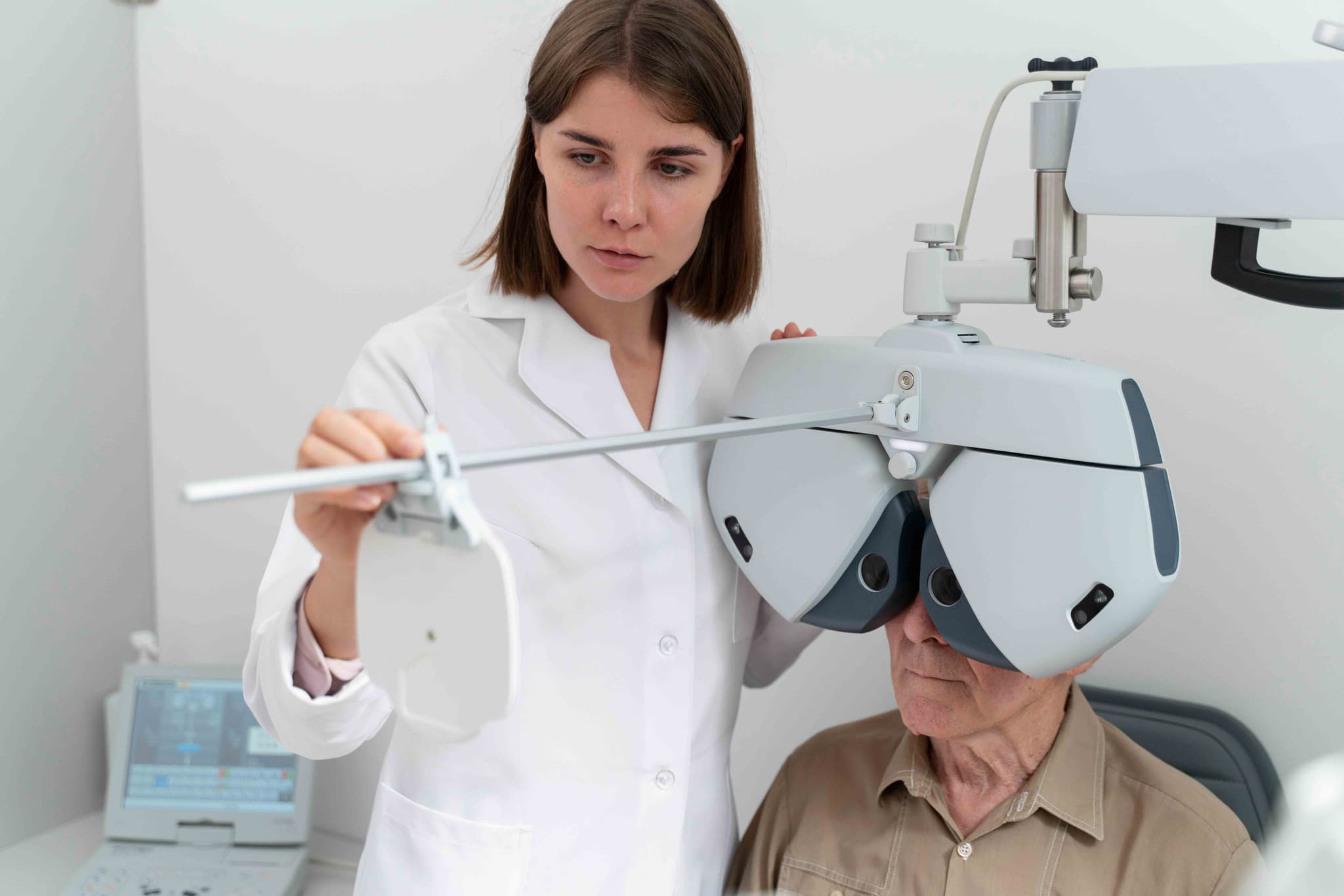
Corneal Topography: A specialized map that measures the curvature and thickness of the cornea to ensure it is healthy enough for surgery.
Pachymetry: Measuring corneal thickness; Femto-LASIK is often preferred for patients with thinner corneas.
Dry Eye Assessment: Checking tear production to determine if post-operative dryness needs to be managed proactively.
Wavefront Analysis: A highly detailed "fingerprint" of your vision that detects subtle imperfections to guide a customized laser treatment.
Life After LASIK
Initial Vision: Most patients see clearly within 24 to 48 hours, though vision may fluctuate slightly for the first few days.
Post-Op Symptoms: Temporary grittiness, dryness, or light sensitivity is normal immediately following the surgery.
Prescribed Drops: You must strictly follow the schedule for antibiotic and anti-inflammatory eye drops to prevent infection.
Eye Protection: Wearing protective sunglasses or shields is recommended, especially while sleeping, to prevent accidental rubbing.
Activity Restrictions: For the first week, avoid wearing eye makeup, swimming, or participating in contact sports.
Why Specialized Treatment Is Highly Effective
Higher Precision: Femto-LASIK allows for customizable flap dimensions, ensuring a safer and more predictable surgical outcome.
Expanded Eligibility: Bladeless technology makes refractive surgery an option for patients who were previously told their corneas were too thin for a blade.
Reduced Complications: The use of a computer-guided laser minimizes risks such as irregular flap creation or flap dislocation.
Rapid Results: Most patients return to work and light daily activities within 24 hours of the procedure.
Permanent Vision Correction: By physically reshaping the cornea, the procedure provides a long-term solution for refractive errors.