Endoscopic Skull Base Surgery
Endoscopic Skull Base Surgery
Endoscopic Skull Base Surgery is a minimally invasive technique used to reach tumors and abnormalities at the very bottom of the brain and the top of the spine. Instead of utilizing large incisions or traditional "open" craniotomies, surgeons use the nose and sinuses as natural corridors to reach the target area. This advanced approach allows for the treatment of complex conditions located deep within the head without the need to retract or move the brain.
When You Should Consider Endoscopic Skull Base Surgery
Pituitary Adenomas: The most common use for this approach, particularly for tumors affecting hormone levels or vision.
Meningiomas & Chordomas: Tumors located at the base of the skull that would otherwise require highly invasive open surgery.
Craniopharyngiomas: Complex tumors located near the pituitary gland and optic nerves.
CSF Leaks: Repairing physical holes in the skull base where brain fluid is dripping from the nose.
Acoustic Neuromas: Certain tumors affecting the nerves responsible for balance and hearing.
Esthesioneuroblastoma: Rare tumors arising from the olfactory (smell) nerves at the roof of the nose.
How It Is Performed
Team Effort: The surgery is typically a collaborative effort between a Neurosurgeon and an ENT (Otolaryngologist), performed under general anesthesia over 3 to 7 hours.
Nasal Access: The ENT surgeon inserts a high-definition endoscope (a thin tube with a camera) through the nostrils. No external skin incisions are made on the face or scalp.
Navigation: Using a 3D "GPS" system mapped from your pre-operative MRI, the surgeons navigate through the sphenoid or ethmoid sinuses to reach the skull base bone.
Bone Opening: A small, precise window is created in the thin bone at the base of the skull to expose the protective lining of the brain (dura) or the tumor itself.
Tumor Removal: Using long, specialized micro-instruments through the other nostril, the tumor is removed in sections. The endoscope provides a close-up, panoramic view of critical structures like the optic nerves and carotid arteries.
Reconstruction: To prevent brain fluid leaks, the surgical opening is sealed using a nasoseptal flap (a flap of your own nasal tissue with its own blood supply), fat grafts, or specialized synthetic glues.
Pre-Procedure Preparation
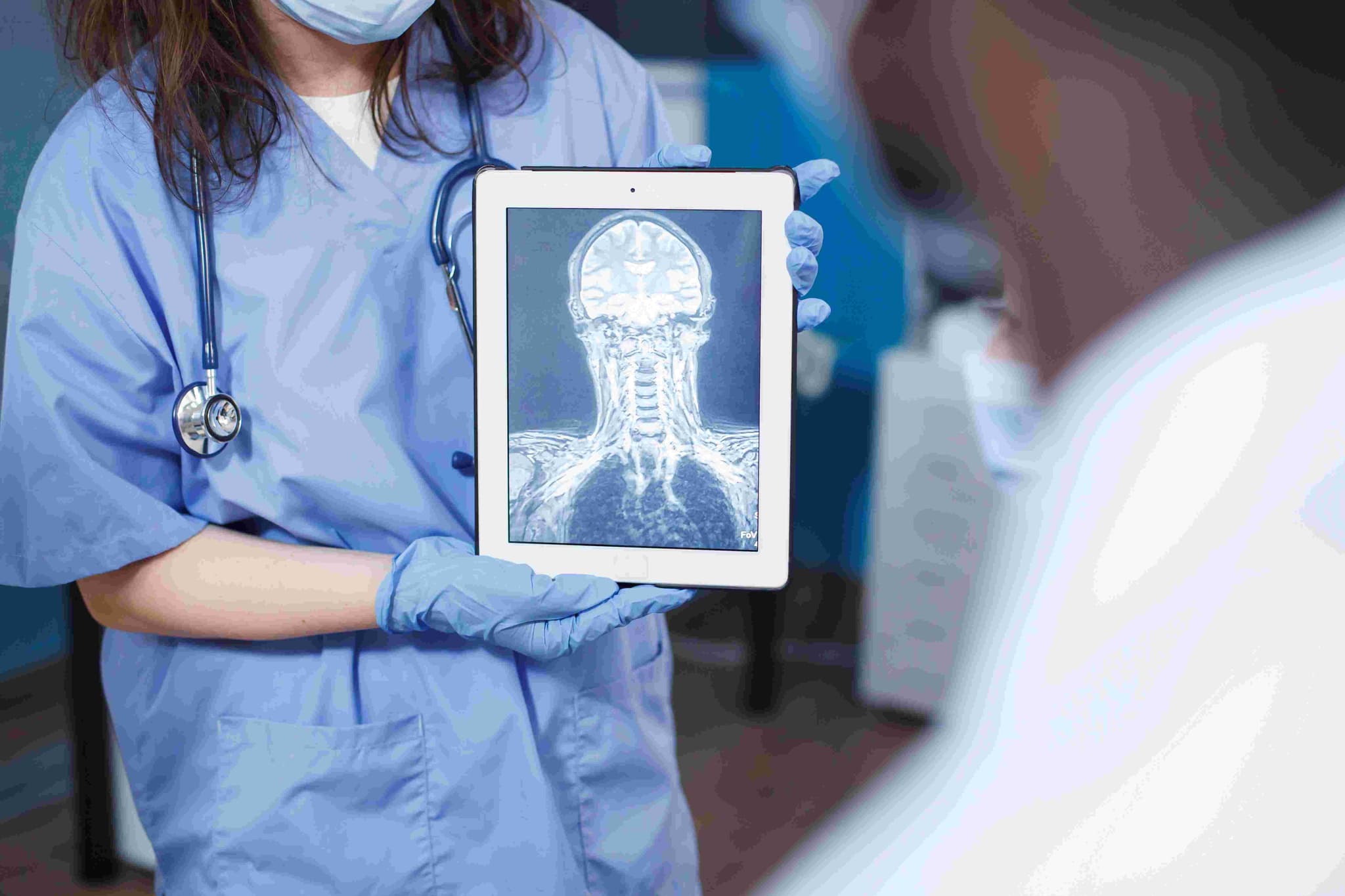
High-Resolution Imaging: Dedicated skull base MRI and CT scans to map the bone anatomy and vascular structures.
Endocrine Testing: Comprehensive blood panels to check pituitary hormone function before the gland is approached.
Ophthalmology Review: Detailed visual field and acuity testing if the tumor is near the optic nerves.
Nasal Endoscopy: A quick office-based look at your nasal passages to ensure there are no obstructions like polyps or a severely deviated septum.
Fasting: Adhering to "nothing by mouth" instructions for 8 hours prior to your scheduled anesthesia.
Tests Before Endoscopic Skull Base Surgery
CT Navigation Scan: A specialized scan used to "sync" your anatomy with the surgical GPS system in the operating room.
Visual Field Test: To establish a baseline for your peripheral vision, which is often improved by the surgery.
Blood Panels: A routine check of your blood count, electrolytes, and clotting factors.
ECG: A standard heart check to confirm cardiovascular stability for a multi-hour procedure.
Life After Endoscopic Skull Base Surgery
Hospital Stay: Typically 2 to 4 days, with the first night often spent in the Neuro-ICU for intensive monitoring.
Immediate Symptoms: Nasal congestion, "crusting" inside the nose, and mild headaches are normal for 2 to 3 weeks as the sinuses heal.
Nasal Care: You will need to perform frequent saline nasal rinses to keep the surgical area clean and moist.
The "No" Rules (4–6 Weeks): To protect the internal seal and prevent a CSF leak, you must strictly avoid:
Blowing your nose: This can force air into the brain cavity.
Straining: Stool softeners are usually prescribed to prevent internal pressure.
Heavy lifting: Nothing over 5 kg (11 lbs).
Drinking through a straw: The suction pressure can disrupt the nasal flap.Long-term Follow-up: Regular nasal debridement (cleaning) by your ENT and follow-up MRIs are required to monitor healing and ensure no tumor recurrence.
Why Specialized Treatment Is Highly Effective
No Visible Scars: By using the nose as a natural corridor, there are no incisions on the face, preserving your natural appearance.
Faster Recovery: Avoiding a traditional craniotomy means significantly less post-operative pain and a quicker return to daily activities.
Panoramic Visualization: The endoscope allows surgeons to see "around the corner" of critical nerves and arteries with better clarity than a traditional microscope.
Brain-Sparing Technique: Because the approach is from underneath the brain, there is no need for brain retraction, reducing the risk of post-operative swelling or cognitive changes.
Highly Precise Reconstruction: The use of vascularized nasoseptal flaps has revolutionized the success rate of sealing the skull base, making the procedure safer than ever before.
Endoscopic Skull Base Surgery Cost in India
The cost of Endoscopic Skull Base Surgery in India is generally affordable compared with many other countries, making India a popular destination for international patients seeking quality medical care. The treatment cost depends on factors such as the hospital, doctor's experience, treatment approach, medical condition, hospital stay, diagnostic tests, medicines, and any additional procedures required. For international patients, the starting cost of Endoscopic Skull Base Surgery in India is approximately 3000 USD, although the final price may vary based on individual treatment requirements. Patients are advised to obtain a personalized treatment estimate after medical evaluation.