Mesh Hernioplasty
Mesh Hernioplasty
Mesh Hernioplasty is the surgical repair of a hernia using a synthetic or biological flat sheet (mesh) to reinforce a weakened abdominal wall. Unlike a traditional herniorrhaphy, which simply stitches the muscle together, a hernioplasty is a tension-free repair. This approach is considered the global gold standard for significantly reducing the likelihood of a hernia returning.
When You Should Consider Mesh Hernioplasty
Presence of a visible bulge in the abdomen or groin that increases with physical strain.
Recurrent hernias where previous non-mesh (stitch-only) repairs have failed.
Large abdominal wall defects that cannot be closed securely with stitches alone.
Pain, pressure, or a pulling sensation at the site of a previous surgical scar or natural weakness.
Confirmation of a hernia defect through a physical exam or diagnostic imaging like a CT scan.
Methods of Mesh Hernioplasty
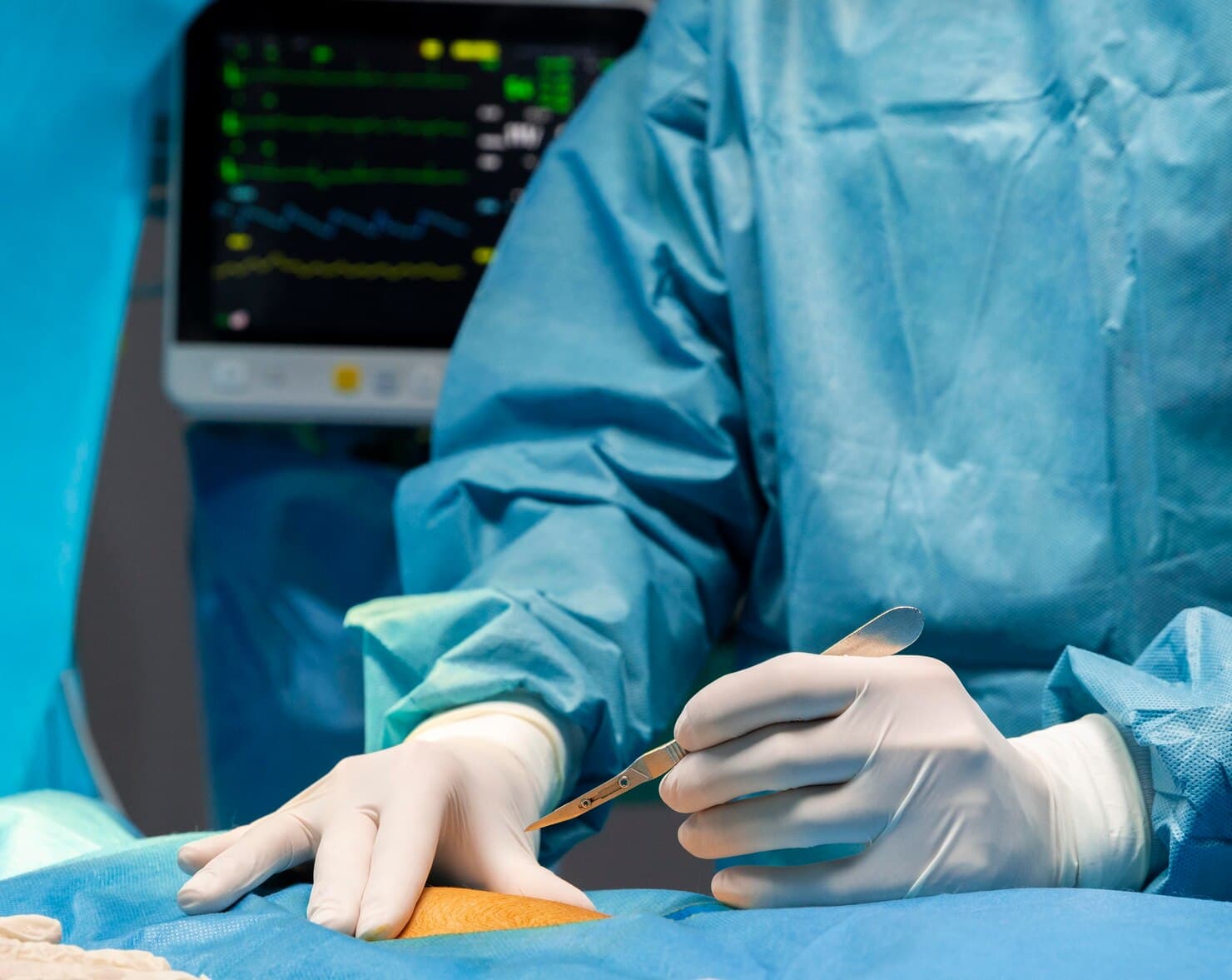
Open Hernioplasty: A traditional approach where a single incision is made directly over the hernia to place and secure the mesh.
Laparoscopic Hernioplasty: A minimally invasive "keyhole" technique using a camera and small ports to place mesh from the inside.
Robotic Hernioplasty: Utilizing robotic assistance for high-precision mesh placement and complex abdominal wall reconstruction.
Tension-Free Repair: A specialized technique where the mesh bridges the gap in the muscle without pulling the edges together, minimizing post-op pain.
How Mesh Hernioplasty Is Performed
Tissue Reduction: The bulging fat or intestine is gently returned to its proper position inside the abdominal cavity.
Mesh Customization: A mesh is selected and often trimmed to overlap the edges of the muscle defect by at least 3–5 cm.
Layered Placement: Depending on the technique, mesh is placed on top of the muscle (onlay), between muscle layers (sublay), or under the muscle (underlay).
Fixation: The mesh is secured using permanent sutures, specialized tacks, staples, or medical-grade surgical glue.
Integration: The surgeon ensures the mesh is flat and secure to allow natural fibrous tissue to grow into the mesh pores over time.
Pre-Procedure Preparation
Fasting (NPO) for 6–8 hours prior to the scheduled surgery.
Pausing blood-thinning medications to prevent the formation of hematomas around the mesh site.
Pre-operative evaluation to determine the most appropriate type of anesthesia (General, Spinal, or Local).
Measurement of the hernia defect via ultrasound or CT scan to ensure the correct mesh size is available.
Tests Before Mesh Hernioplasty
Physical Evaluation: To check the size of the bulge and determine if the tissue is "incarcerated" or trapped.
CT Scan or Ultrasound: Imaging used to measure the exact dimensions of the hole in the abdominal wall.
Blood Panels: Routine screens to ensure the patient is fit for the selected type of anesthesia.
Electrocardiogram (ECG): Often performed for older patients to assess heart health before the procedure.
Life After Mesh Hernioplasty
Most patients return home the same day, as the procedure is typically performed on a day-care basis.
Strict activity restrictions are required, including no heavy lifting (>5 kg) for at least 6 weeks.
Use of an abdominal binder or compression garment for approximately 4 weeks to support the repair.
Patients may feel "twinges" or minor soreness for a few months as the body integrates the mesh.
Return to light activities is encouraged early to promote circulation and healing.
Benefits of Mesh Hernioplasty
Significantly lowers the recurrence rate from up to 30% (with stitches alone) to less than 5%.
Provides a permanent, lifelong "scaffold" that reinforces the weakened abdominal wall.
The tension-free nature of the repair results in less post-operative pain compared to traditional methods.
High technical success rates and durability, as the mesh is designed to stay in the body indefinitely.
Mesh Hernioplasty Cost in India
The cost of Mesh Hernioplasty in India is generally affordable compared with many other countries, making India a popular destination for international patients seeking quality medical care. The treatment cost depends on factors such as the hospital, doctor's experience, treatment approach, medical condition, hospital stay, diagnostic tests, medicines, and any additional procedures required. For international patients, the starting cost of Mesh Hernioplasty in India is approximately 500 USD, although the final price may vary based on individual treatment requirements. Patients are advised to obtain a personalized treatment estimate after medical evaluation.