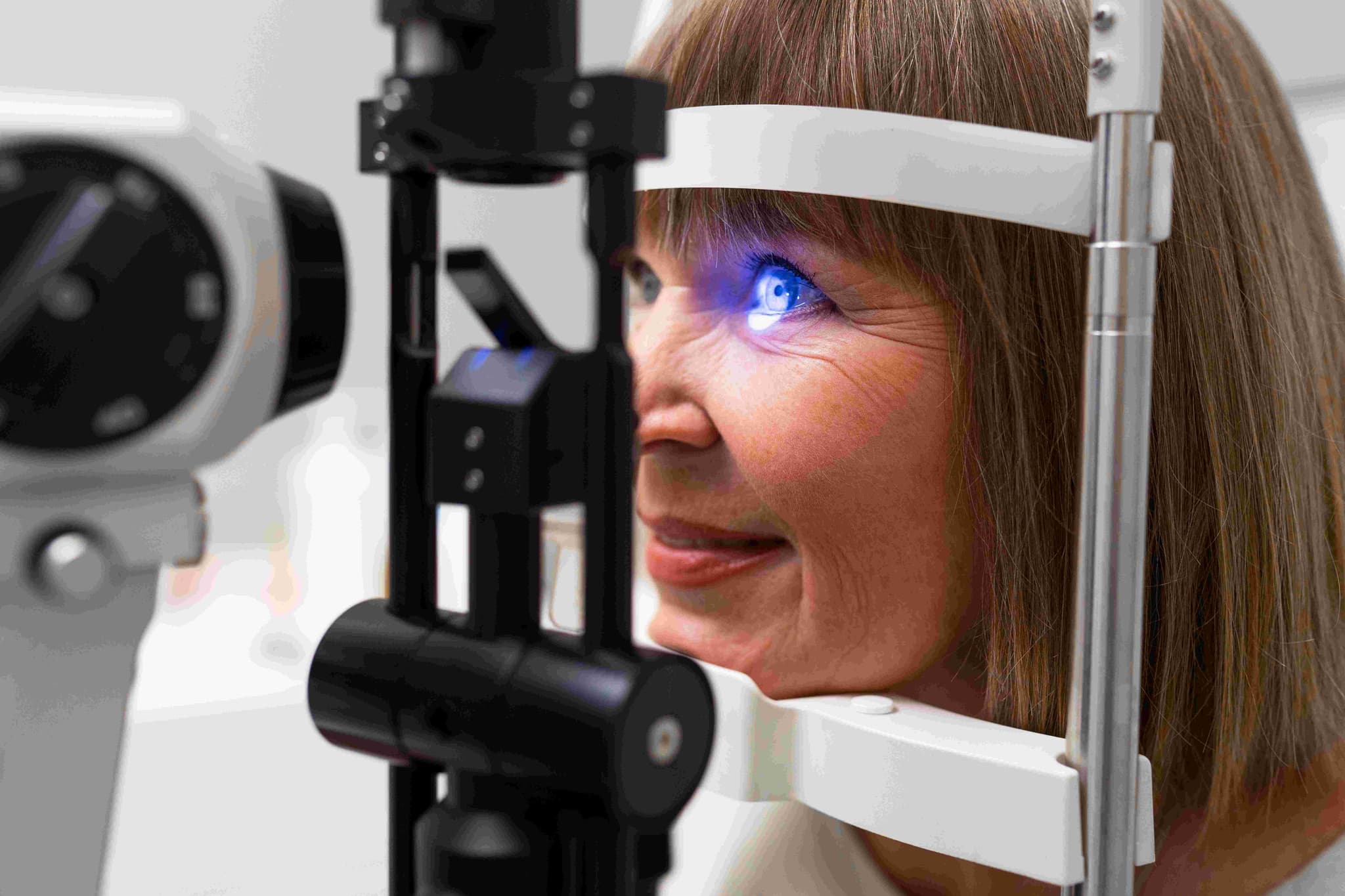
Femtosecond Laser Cataract Surgery
FLACS (Femtosecond Laser-Assisted Cataract Surgery)
Femtosecond Laser-Assisted Cataract Surgery (FLACS) is a modern, high-precision version of cataract surgery that uses a computer-guided laser to perform several critical steps traditionally done by hand. Often referred to as "robotic" cataract surgery, it relies on advanced 3D imaging and automated laser pulses to ensure unparalleled accuracy and safety.
When You Should Consider FLACS
Premium Lens Selection: If you are choosing multifocal, trifocal, or toric IOLs, where perfect lens centration is critical for optimal vision.
Pre-existing Astigmatism: When you wish to correct corneal astigmatism during the same procedure to reduce dependence on glasses.
Vulnerable Corneas: For patients with conditions like Fuchs' dystrophy, where reducing surgical energy is vital to protecting the cornea.
Advanced Cataracts: When the lens is particularly dense, the laser can pre-soften the cataract, making removal safer.
Desire for Precision: When seeking the highest level of computer-guided accuracy to minimize manual variability.
How Is Performed
Imaging & Mapping: The surgeon uses Optical Coherence Tomography (OCT) to create a detailed 3D map of the eye's unique internal anatomy.
Corneal Incisions: Based on the 3D map, the laser creates ultra-precise, self-sealing incisions for surgical entry.
Capsulotomy: The laser creates a perfectly circular opening in the thin membrane (capsule) that holds the lens.
Lens Fragmentation: The laser vibrates at high speeds to soften and break the cataract into tiny pieces before any tools enter the eye.
Lens Removal: The pre-softened fragments are gently suctioned out using an ultrasonic probe with significantly reduced energy.
IOL Implantation: A permanent artificial intraocular lens (IOL) is inserted to restore clear focus.
Duration: The entire outpatient process typically takes between 15 and 30 minutes per eye.
Pre-Procedure Preparation
Detailed Biometry: Advanced laser measurements of the eye's length and curvature to select the most appropriate IOL.
3D Surgical Planning: Using the OCT data to program the laser for the exact depth and location of all incisions.
Medication Audit: Starting antibiotic or anti-inflammatory eye drops a few days before the procedure as prescribed.
Fasting: Following clinical instructions regarding food and water intake on the morning of the surgery.
Logistics: Arranging for a companion to assist with the return home, as vision may be temporarily blurry.
Tests Before FLACS
Optical Coherence Tomography (OCT): To visualize the different layers of the eye and ensure the macula is healthy.
Topography: Mapping the surface of the cornea to plan for astigmatism correction.
Endothelial Cell Count: Checking the health of the inner corneal layer, especially for patients with pre-existing corneal issues.
Visual Field Testing: To confirm that the cataract is the primary cause of vision loss and rule out other underlying conditions.
Life After FLACS
Initial Vision: Many patients report clearer vision within 24 to 48 hours due to reduced intraoperative inflammation.
Medication: Strict adherence to antibiotic and anti-inflammatory eye drops for several weeks is necessary for healing.
Eye Protection: Wearing a protective shield while sleeping for the first week to prevent accidental pressure or rubbing.
Activity Restrictions: Patients should avoid heavy lifting, bending over, or getting water/dust in the eye for the first 2–3 weeks.
Long-Term Healing: While initial improvement is rapid, full stabilization of the eye typically takes 4 to 6 weeks.
Why Specialized Treatment Is Highly Effective
Enhanced Precision: Laser-guided steps are accurate to within a hundredth of a millimeter, significantly reducing manual variability.
Reduced Stress on the Eye: Because the laser pre-softens the lens, much less ultrasound energy is required, leading to faster corneal recovery.
Perfect Centration: The automated capsulotomy ensures the artificial lens is perfectly centered, which is vital for the performance of premium lenses.
Customized Correction: The laser can reshape the cornea to treat minor astigmatism with a level of accuracy difficult to achieve by hand.
Consistent Outcomes: The integration of real-time 3D imaging allows for a highly predictable and standardized surgical experience.
Femtosecond Laser Cataract Surgery Cost in India
The cost of Femtosecond Laser Cataract Surgery in India is generally affordable compared with many other countries, making India a popular destination for international patients seeking quality medical care. The treatment cost depends on factors such as the hospital, doctor's experience, treatment approach, medical condition, hospital stay, diagnostic tests, medicines, and any additional procedures required. For international patients, the starting cost of Femtosecond Laser Cataract Surgery in India is approximately 800 USD, although the final price may vary based on individual treatment requirements. Patients are advised to obtain a personalized treatment estimate after medical evaluation.