Pleurectomy / Decortication
Pleurectomy and Decortication
Pleurectomy and Decortication are major thoracic surgeries often performed together to treat diseases of the pleura (the lining of the lungs). While a pleurectomy involves the surgical removal of the diseased lining, decortication focuses on "peeling" off a thick layer of inflammatory or scar tissue—often called a "rind"—that is trapping the lung and preventing it from expanding. Together, these procedures aim to restore lung function and alleviate the chronic "heaviness" or shortness of breath caused by pleural disease.
When You Should Consider Pleurectomy and Decortication
Malignant Pleural Mesothelioma: Used as a lung-sparing surgical option to remove as much cancer as possible from the chest lining.
Chronic Empyema: When a long-term infection or pus buildup has created a thick, restrictive layer of scar tissue around the lung.
Persistent Pleural Effusions: For patients with recurring fluid buildup that has led to a "trapped lung" that can no longer expand on its own.
Fibrothorax: When the lung is encased in a rigid layer of fibrous tissue following a previous injury, infection, or inflammatory condition.
Chronic Hemothorax: To remove old, clotted blood and the resulting scar tissue that has formed after a traumatic chest injury.
Methods Of Pleurectomy and Decortication
Open Thoracotomy: The traditional and most common approach, involving a 6–10 inch incision on the side of the chest to provide the surgeon with maximum access for the meticulous "peeling" process.
Video-Assisted Thoracoscopic Surgery (VATS): A minimally invasive method used in earlier stages of infection or cancer, utilizing small "keyhole" incisions and a camera.
HIPE (Hyperthermic Intrathoracic Chemotherapy): An advanced technique where heated chemotherapy is circulated within the chest cavity during surgery to target remaining cancer cells.
Extended Pleurectomy/Decortication: A more radical version that may include removing the diaphragm or the sac around the heart (pericardium) if the disease has spread to those areas.
Robotic-Assisted Decortication: A modern variation of the minimally invasive approach that offers enhanced precision for separating delicate scar tissue from the lung surface.
How Is Performed
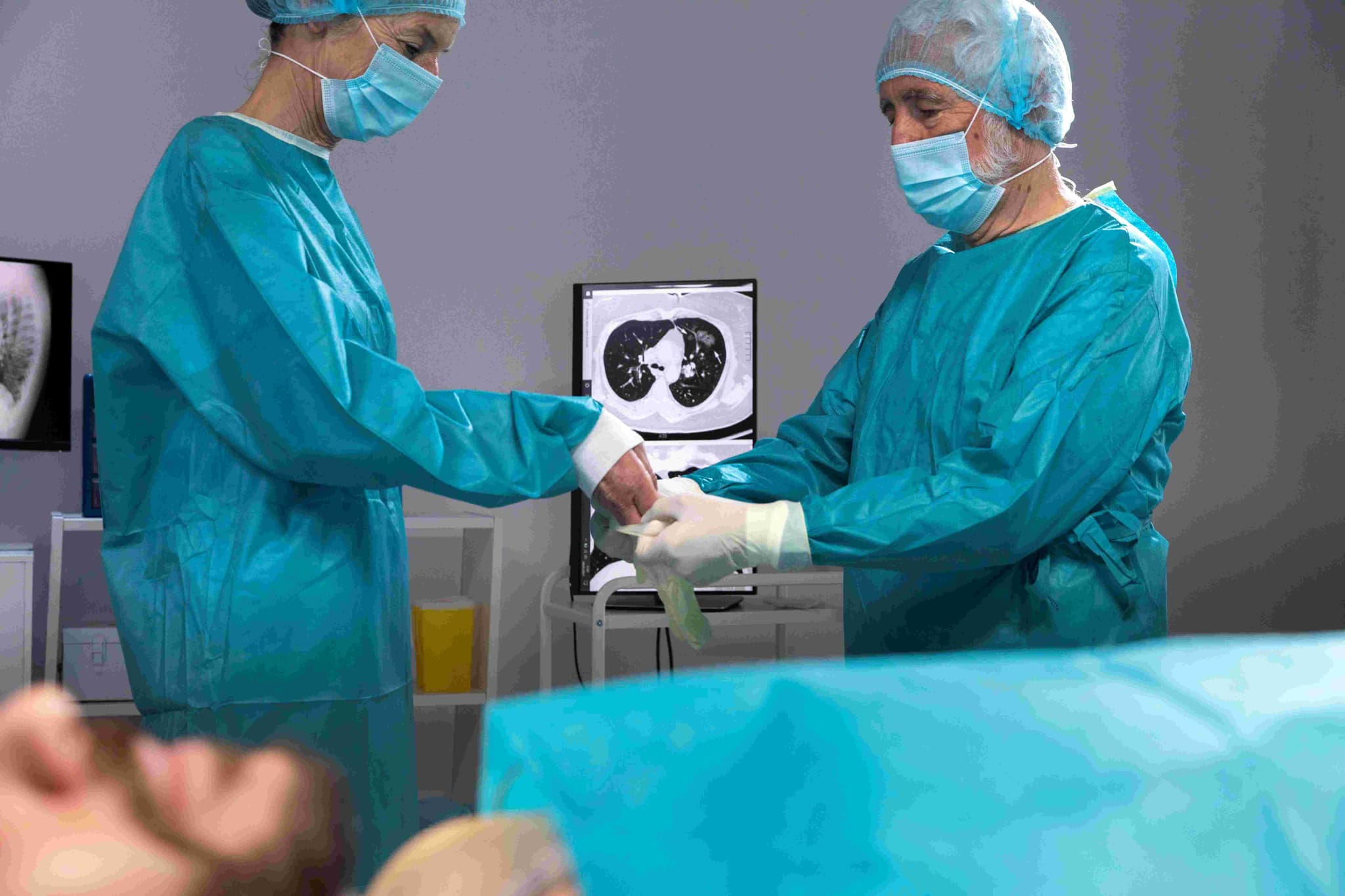
Surgical Access: Under general anesthesia, the surgeon enters the chest cavity—usually through a thoracotomy—and deflates the lung on the affected side.
Pleurectomy: The surgeon meticulously strips away the parietal pleura (the lining attached to the ribs and chest wall), systematically removing the source of disease.
Decortication: In this highly delicate stage, the surgeon "peels" the thick, restrictive fibrous rind off the surface of the lung (the visceral pleura).
Lung Re-expansion: The surgeon gently inflates the lung to ensure it can now fill the chest cavity and that the fibrous "trap" has been successfully removed.
Hemostasis and Air Leak Check: The lung surface is carefully inspected for tiny holes or bleeding points, which are sealed using surgical glues, staples, or sutures.
Chest Tube Placement: Two or three large drainage tubes are placed in the chest to remove air, blood, and fluid, ensuring the lung remains expanded during the healing process.
[Image showing a thoracotomy incision and the removal of the pleural lining]
Pre-Procedure Preparation
Imaging and Mapping: High-resolution CT scans or MRIs are mandatory to assess the thickness of the rind, while a PET scan may be used to evaluate cancer activity.
Pulmonary Function Tests (PFTs): Essential tests to measure baseline lung capacity and ensure the patient can tolerate the temporary deflation of the lung during surgery.
Smoking Cessation: Patients must stop smoking at least 4 weeks prior to the procedure to significantly reduce the risk of postoperative pneumonia.
Nutritional Support: Because this is an extensive surgery, optimizing protein and calorie intake is vital to support complex tissue healing.
Fasting (NPO): No food or drink for 8–12 hours before the surgery to ensure safety under general anesthesia.
Tests Before Pleurectomy and Decortication
Chest CT with Contrast: The primary tool used to visualize the "pleural peel" and plan the surgical approach.
Quantitative V/Q Scan: Occasionally performed to predict exactly how much each lung is contributing to the patient’s overall breathing.
Electrocardiogram (EKG): To ensure heart health, as the procedure involves working near the heart and major blood vessels.
Complete Blood Count (CBC): To check for underlying infection (high white blood cell count) or anemia before a procedure where blood loss can be significant.
Life After Pleurectomy and Decortication
Hospital Stay: Typically 7 to 14 days; the stay depends heavily on how long it takes for the "air leaks" on the lung surface to seal and for the chest tubes to be removed.
Pain Management: This is considered one of the most painful surgical recoveries; patients often receive an epidural or specialized nerve blocks for the first few days.
Intensive Respiratory Therapy: Frequent use of an incentive spirometer and deep coughing exercises are mandatory to keep the lung expanded and prevent infection.
Early Mobilization: Patients are encouraged to sit up and walk within 24 hours of surgery to improve circulation and prevent blood clots (DVT).
Long-Term Recovery: It typically takes 8 to 12 weeks to return to normal energy levels, with dramatic improvements in breathing often felt once the chest wall has healed.
Benefits Of Pleurectomy and Decortication
Restores Lung Capacity: By removing the restrictive rind, the lung can once again expand and provide oxygen, significantly improving quality of life.
Cytoreduction in Cancer: Effectively removes the vast majority of visible tumor in mesothelioma cases, allowing follow-up treatments to work more effectively.
Clears Chronic Infection: Provides a definitive cure for trapped infections (empyema) that cannot be drained by simple needles or tubes.
Reduces Chest Heaviness: Alleviates the chronic, "tight" sensation and pain associated with a thickened and scarred pleural lining.
Lung-Sparing Approach: Unlike a pneumonectomy, this procedure preserves the lung tissue itself, maintaining a higher level of long-term respiratory function.
Pleurectomy / Decortication Cost in India
The cost of Pleurectomy / Decortication in India is generally affordable compared with many other countries, making India a popular destination for international patients seeking quality medical care. The treatment cost depends on factors such as the hospital, doctor's experience, treatment approach, medical condition, hospital stay, diagnostic tests, medicines, and any additional procedures required. For international patients, the starting cost of Pleurectomy / Decortication in India is approximately 3000 USD, although the final price may vary based on individual treatment requirements. Patients are advised to obtain a personalized treatment estimate after medical evaluation.